
CAPTCHA protection

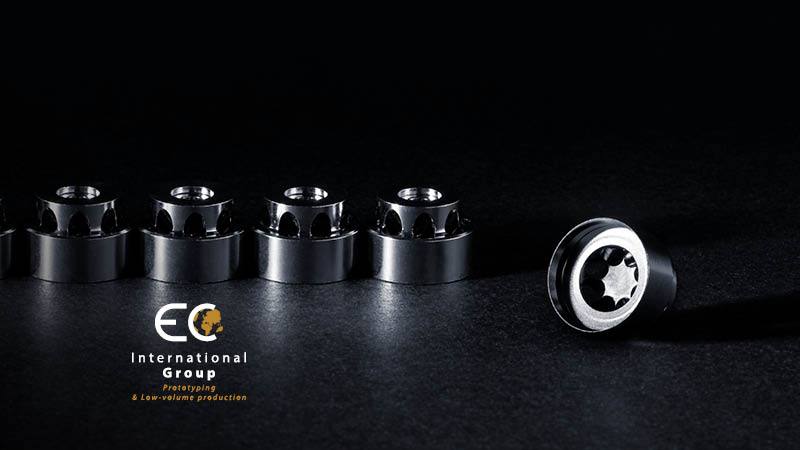
Manufacturing a CNC prototype that meets specifications is a first success. Producing 50, 100 or several thousand parts with the same level of quality is a different challenge.
Tolerances, materials, surface finishes, inspections, documentation and production capacity all need to be anticipated before launching a series.
The challenge is no longer simply to get part #1 right. It is to make sure part #100 meets the same requirements.
Rapid prototyping primarily serves a validation purpose: geometry, assembly, material, functionality or product performance.
When a project moves into low-volume production, the challenge becomes more industrial. The manufacturing process must be able to reproduce the part under controlled conditions and deliver consistent results across the entire batch.
Six parameters then become particularly important:
This transition should ideally be anticipated from the prototyping stage.
Achieving a compliant dimension on one prototype does not automatically guarantee that the same result will be maintained across 100 or 1,000 parts.
As volumes increase, CNC process repeatability becomes critical.
Part geometry, machining strategy, fixturing, tooling, cutting parameters and operation sequences can all influence process stability.
The first step is therefore to identify the part's truly critical characteristics so that both the manufacturing process and the inspection strategy can be adapted accordingly.
This also helps avoid applying extremely tight tolerances to areas where they are not functionally required. An unnecessarily restrictive tolerance can increase manufacturing complexity, inspection time and production cost without improving the part's performance.
The right tolerance is not necessarily the tightest one: it is the tolerance that precisely matches the function of the part.
A prototype may require specific adjustments during manufacturing. Low-volume production, on the other hand, requires a stable and repeatable process.
CNC programming, machining parameters, tooling, fixturing and production sequences must be designed to limit variation from one part to another.
This is where automation becomes especially relevant.
EC International Group operates a fleet of 3-, 4-, 5- and 6-axis CNC machines and is further strengthening its capabilities in 2026 with the integration of new automated and robotized DMG MORI and TSUGAMI production lines.
Automated loading and unloading, part handling, pallet systems and extended production with reduced operator intervention help increase machine utilization and reduce non-productive time.
These investments pursue four main objectives: increase low-volume production capacity, improve repeatability, reduce non-productive time and secure production lead times.
In low-volume production, quality control cannot simply consist of inspecting a few parts once the entire batch has been completed.
The objective is also to identify potential process drift before it can affect the entire production batch.
The appropriate level of inspection is therefore defined according to the drawing, tolerances, part criticality and customer requirements.
Depending on the project, this may include:
EC International Group uses a range of metrology equipment including coordinate measuring machines (CMM), profile projectors, height gauges, surface roughness testers, concentricity measuring equipment and hardness testers, complemented by conventional metrology tools.
Depending on the characteristics of the part, additional inspections may also be carried out for surface roughness, hardness, concentricity, appearance, functional performance or specific testing requirements.
These measuring resources are integrated into the Group's quality management system, including their management, verification and calibration.
Repeatability does not only apply to dimensions.
Material characteristics and treatments applied to the part must also remain controlled from one production batch to another.
When moving into low-volume production, managing material references and batches, heat treatments and surface treatments therefore becomes increasingly important.
Anodizing, painting, zinc plating, passivation and other finishes can introduce their own dimensional, functional or cosmetic requirements.
The manufacturing process must therefore be considered as a whole: from raw material to the finished and inspected part.
For demanding industrial applications, knowing that a part is compliant is not always enough. It may also be necessary to document how it was manufactured and inspected.
At EC International Group, traceability can cover the different stages of the production process:
Material → Production → Operations → Inspections → Delivery
Depending on project requirements, production records may identify:
Individual part traceability can also be implemented when required by the project.
This approach is particularly important in industries with demanding process-control requirements, including aerospace, space, defense, medical and automotive.
Not every low-volume production project requires the same level of documentation.
A standard industrial component and a critical part intended for an aerospace or medical application do not necessarily require the same quality file.
EC International Group therefore adapts documentation according to the industry, part criticality and requirements agreed with the customer.
Depending on the project, documentation may include:
Material certificates • CoC • Dimensional reports • CMM reports • FAI • Control plans • CPK studies • PPAP • RoHS / REACH declarations
EN 10204 type 2.1, 2.2 or 3.1 material certificates can also be provided depending on requirements.
This organization is supported by a quality management system structured around several international standards, including ISO 9001, EN 9100, ISO 13485 and IATF 16949, depending on the relevant activities and industries.
The objective is not to add unnecessary paperwork, but to define the appropriate level of evidence for each project.
The definition of “low-volume production” varies significantly depending on the manufacturing process, part complexity and technical requirements.
In CNC machining, EC International Group can support projects from a single part to production runs of several thousand parts, depending on geometry, material, tolerances, cycle time and required inspection level.
For recurring production, scheduled deliveries can also be implemented to gradually align manufacturing output with the customer's production requirements.
This continuity from prototype to pre-series and recurring production makes it possible to retain the same manufacturing partner and a single point of contact, while adapting the industrial process as volumes increase.
The objective: avoid having to rebuild the entire manufacturing setup once the project moves into production.
For a defense equipment manufacturer, EC International Group supported the development of a lightweight protective housing for an optical sighting system installed on a land vehicle.
The component had to withstand shocks, vibrations and harsh environmental conditions while integrating precision optics.
The selected solution uses 7075-T6 aluminum machined on 5-axis CNC equipment, with tolerances reaching ±0.005 mm on selected critical areas, followed by a black hard-anodized finish.
Several versions were initially produced, with batches of 10 parts for the different validation phases.
Once validated, the project moved into recurring production in batches of 1,000 parts, with deliveries scheduled according to customer requirements, reinforced traceability and a quality-control process adapted to production volumes.
This transition illustrates the real challenge of low-volume manufacturing: not simply reproducing a prototype, but transforming a validated solution into a reliable and repeatable industrial process.
The best time to prepare for low-volume production is not when an order for 1,000 parts arrives.
It starts with the first prototypes.
An early manufacturability review helps identify characteristics that could complicate future production: demanding tolerances, difficult-to-access areas, complex geometries, material selection, treatments or inspection requirements.
Discussions between design and manufacturing teams can then help balance performance, manufacturability, quality, lead time and cost before volumes increase.
A prototype should therefore not only answer the question:
“Does this part work?”
It should also prepare for the next one:
“Can we manufacture it reliably and repeatedly?”
Moving from rapid prototyping to low-volume production is not simply about manufacturing more parts.
It is the transition from validation to industrial process control.
Repeatable tolerances, stable CNC processes, controlled materials and finishes, quality inspection, traceability, documentation and production capacity all become critical.
EC International Group supports engineering and procurement teams from prototype to recurring production, combining in-house CNC capabilities, dedicated inspection resources, a structured quality system and a single point of contact throughout the project.
Is your prototype validated and are you preparing for the next stage?
CNC prototyping primarily aims to validate the design, dimensions, assembly or performance of a part. Low-volume production also requires a process capable of reproducing the part consistently while controlling tolerances, quality, traceability, cost and lead times.
There is no universal threshold. The relevant volume depends on geometry, material, tolerances, cycle time and inspection requirements. EC International Group can support CNC projects from single parts to several thousand units and can implement recurring production with scheduled deliveries.
Repeatability depends on stable CNC programming and machining parameters, controlled tooling and fixturing, consistent materials, identification of critical characteristics and an appropriate inspection plan.
Depending on project requirements, inspections may include FAI, dimensional inspection, CMM measurements, critical-dimension checks, 100% inspection, CPK capability studies and additional checks for roughness, hardness, concentricity, appearance or specific functional requirements.
Depending on the project, documentation may include material certificates, CoC, dimensional or CMM reports, FAI, control plans and CPK studies. Specific documents such as PPAP files or RoHS and REACH declarations may also be provided when required.
Ideally, from the prototyping stage. Anticipating future volumes helps integrate manufacturing, inspection, documentation, lead-time and cost constraints earlier and reduces the risk of late design changes during industrialization.
