
CAPTCHA protection

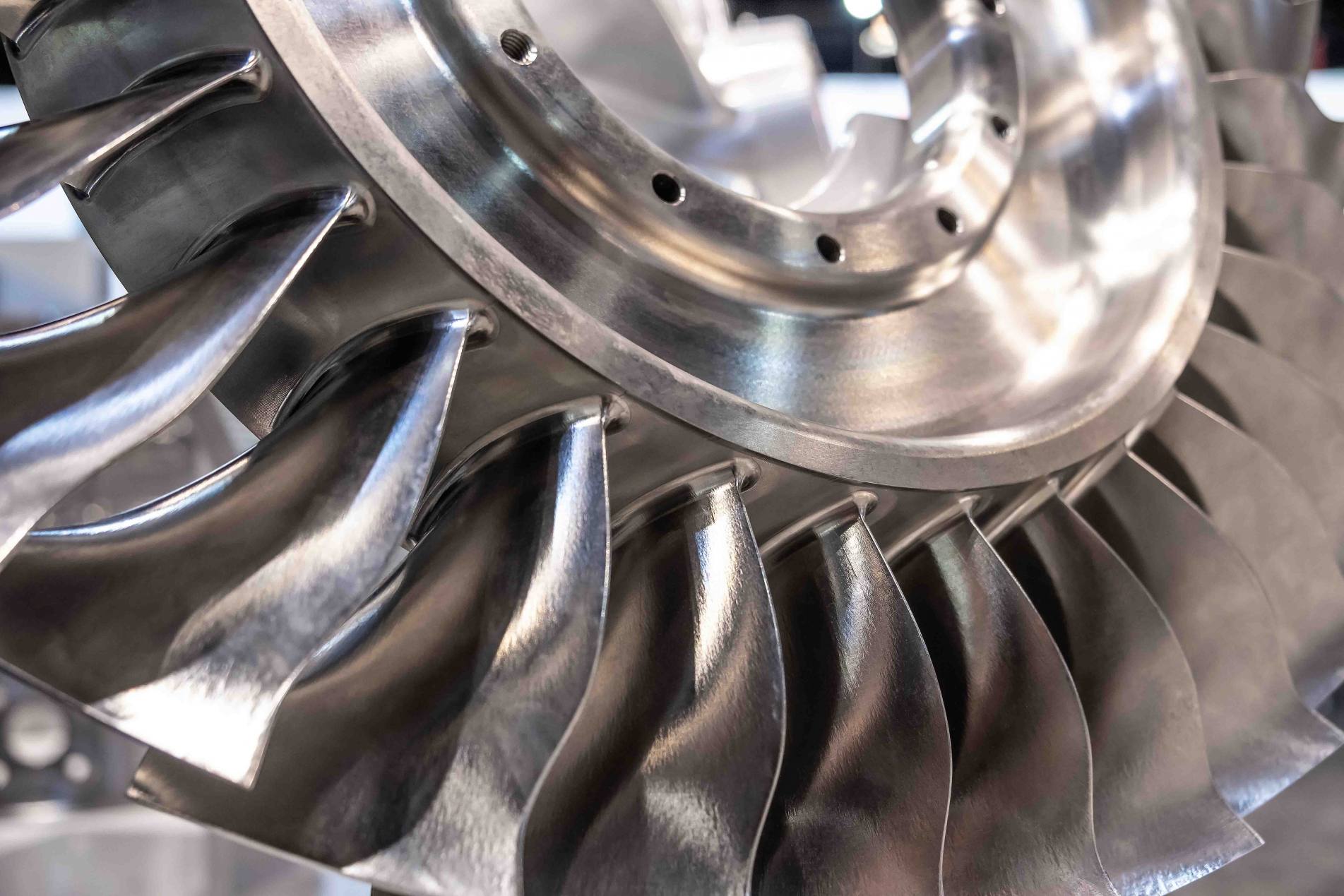
In this article, we explore the key principles behind manufacturing high-precision aerospace components, from material selection to low-volume production. Objective: understand how to choose the right aerospace CNC machining partner capable of meeting the most demanding industry standards.
The aerospace industry is one of the most demanding sectors in terms of quality, precision, and traceability. Every component used in an aircraft, satellite, or avionics system must comply with strict standards to ensure reliability and safety.
In this context, aerospace CNC machining is a subtractive manufacturing process used to produce high-precision parts from certified materials.
CNC machining has become essential for producing:
Today, engineers are looking for partners who can combine:
More and more manufacturers prefer working with qualified industrial partners capable of managing complete projects, from design to production, rather than relying solely on automated platforms.

Manufacturing aeronautics components requires an extremely high level of performance. Parts must operate under extreme conditions while maintaining perfect dimensional accuracy.
Aerospace parts manufacturing must withstand:
To meet these constraints, advanced manufacturing technologies are used, including:
A high-precision process for cutting complex shapes in hard materials.
These technologies ensure exceptional repeatability and accuracy for aerospace components.

In aerospace manufacturing, tolerances are extremely tight.
Depending on the component, tolerances can reach:
Surface finish requirements (Ra) include:
These precision levels ensure:
Manufacturing processes also include full compliance and traceability:
Key takeaway: the tighter the tolerances, the more strategic your choice of industrial partner becomes.
High-tech industries require strict quality standards to ensure compliance.
At EC International Group, industrial projects rely on internationally recognized certifications:
In aeronautics, space, and defense sectors, additional standards such as EN/AS 9100:2018 are often required.

These certifications guarantee:
Material selection is critical in aeronautics manufacturing. Engineers must balance:
Common grades include:
Advantages:
Used for:
Titanium is a key material for high-performance aeronautics parts.
The Ti-6Al-4V alloy is widely used for:
Applications:
For extreme environments, engineers use:
Applications include:
CNC machining is used to produce a wide range of aeronautics components:
These aerospace components are essential and require absolute reliability.
Several CNC machining technologies are used to manufacture high-precision aeronautics parts, each offering specific advantages for complex applications.
These technologies optimize both precision and production lead times.
Additive manufacturing (3D printing) is often seen as an alternative to CNC machining.
In reality, both technologies are complementary.
CNC machining is preferred when:
3D printing is ideal for:
Aeronautics companies must accelerate their development cycles.
Low-volume production enables:
We regularly support industrial companies during these critical phases where speed and precision are key.
Working with a responsive industrial partner significantly reduces time-to-market.
EC International Group supports industrial companies in manufacturing high-precision technical parts.
Our approach is based on a clear vision of modern industrial partnership: supporting clients throughout the entire project lifecycle.
Our expertise covers:
Each year, over 17,000 industrial projects are delivered across demanding industries:

EC International Group relies on a strong international network with 13 locations worldwide, including R&D centers and production facilities:
Clients benefit from:
Our integrated Europe-Asia industrial model combines:
We deliver in over 18 countries, ensuring responsiveness, proximity, and control.
In 2025, EC International Group achieved +22.10% global sales growth, confirming the strength of this strategy.
With teams across Europe and Asia, certified processes, and advanced manufacturing capabilities, EC International Group continues to expand internationally, with several growth projects currently under consideration.
Speed is critical in modern industrial projects.
EC International Group offers fast production for prototypes, complex parts, and small series:
This allows companies to significantly reduce time-to-market while maintaining high standards of quality and traceability.
Many companies use on-demand manufacturing platforms. However, these platforms often operate as automated marketplaces with limited engineering support.
EC International Group takes a different approach: a true industrial partner committed to project success.
| Criteria | EC International Group | Platforms |
| Support | Dedicated experts | Limited |
| Contact | Single point | Variable |
| Project management | Customized | Automated |
| Client relationship | Direct | Platform-based |
| Quality control | Fully supervised | Variable |
Complex aerospace projects require:
A trusted partner helps optimize:
This ensures full control across the entire industrial chain:
DESIGN → PROTOTYPING → VALIDATION → PRODUCTION
CNC machining remains a core technology for producing high-precision aerospace components.
Thanks to its precision, reliability, and flexibility, it enables the production of:
At EC International Group, we support demanding industrial projects by combining European expertise, global coordination, personalized support, and fast execution.
👉 Have a prototype or low-volume production project? Contact our team today.
👉 Get a quotation quickly and benefit from expert support from design to manufacturing.
What is aerospace CNC machining?
It is the process of manufacturing aircraft parts using CNC machines capable of extremely tight tolerances.
How to manufacture low-volume aerospace parts?
Typical steps include:
CNC or 3D printing for aeronautics?
CNC is preferred for tight tolerances and certified materials.
What materials are used?
Aluminum, titanium, Inconel, and high-performance steels.
What precision can CNC achieve?
Up to ±0.005 mm depending on geometry and materials.
What surface finish is possible?
Up to Ra 0.4 µm on high-precision parts.
What is 5-axis CNC machining?
A process allowing tools to move along five axes for complex geometries.
Which industries use aerospace CNC machining?
Aerospace, space and telecommunication, defense, robotics, energy, automotive, medical, and consumer goods.
